live_tv
Livestream Starting Soon
00
Hours
:
00
Minutes
:
00
Seconds
Up next in 10



✔️ FREE HIT WRITING CHECKLIST ✔️ https://www.orpheusaudioacademy.com/Hit
See the full tutorial here: https://www.orpheusaudioacademy.com/FTM
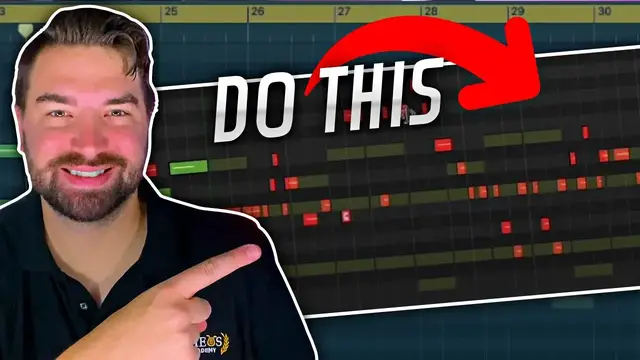
In this video, I share five Melody Writing Tips that will change your music. By following these tips, you'll be able to write beautiful melodies that will inspire your listeners!
Melody writing is an important part of writing great music. If you want to write melodies that stand out and are worth singing, then watch this video and learn the tips that will help you! By following these tips, you'll be able to write melodies that are memorable and stick in your listener's heads.
⛓️ LINKS MENTIONED IN THIS VIDEO ⛓️
? My coaching community: https://www.orpheusaudioacademy.com/FTM
? Hit Creating Checklist: https://www.orpheusaudioacademy.com/hit
#songwriting #songarrangement #musicproduction
? SPOTIFY GROWTH COURSE:
Discover how to generate your first $1,000 a month from Spotify:
https://www.orpheusaudioacademy.com/spotify
Show More Show Less View Video Transcript
0:00
How do you write amazing melodies that stick in your listener's mind and keep them coming back to your song over and over again
0:07
Well, in this video, I'm going to share with you a clip from a full-length masterclass training that I did for my full-time musician coaching community
0:14
And this is going to break down how you can go about writing melodies. It's going to give you some really practical tips on how to write better melodies
0:21
And like I said, this is a clip from a full training that broke down five different arrangement secrets for better songwriting
0:27
This is all inside of my membership. If you want to get access to this yourself, I'll have a link to that in the description below
0:33
Otherwise, this is a little sneak peek that you can get and see what kind of content will
0:37
be inside of this membership. So those are my five arrangement tips, but I've got some bonus melody writing tips for
0:43
you here as well. I wanted to share real quick. So number one, simple is almost always better when it comes to melody writing
0:52
This is kind of goes back to what we mentioned earlier with stepwise motion and passing tones
0:56
right? if you have a melody that goes all over the place it's going to be harder for it to stick in people's
1:02
minds harder for them to remember it harder for other people to start singing it and that's what
1:07
you want if you want to be catchy and memorable and stick in someone's mind you want to be simpler so you want to be simple but also memorable so not it has to be simple but not boring
1:16
in other words which obviously is easier said than done but just something to keep in mind so
1:21
also catchy melodies use chord tones so those are notes within the chord that is currently being
1:27
played. So I'll show you an example of this in a second. Use leaps. I mentioned leaps, but you want
1:34
to use them when you're leaping to other chord tones. So maybe you're sticking to stepwise motion
1:39
or passing tones. So all the notes are kind of close together. But then as the chord progression
1:44
you know, changes, it's going from one chord to the next. You can do a leap, but when you are
1:48
leaping up or leaping down, make sure you're leaping to a note that is also in that chord
1:54
Again, this can be broken. You don't have to do this all the time, but it's just something to keep in mind
1:59
And then, of course, repetition is key. Repetition is key. Repetition is key
2:05
So use motifs. Use similar elements over and over. But, again, don't do it too much
2:12
Remember that rule three. Remember that eight-bar rule to change something up every eight bars or every third phrase
2:20
And it can also be helpful to vocalize your melodies when writing them instead of just trying to like play them on a keyboard or something
2:27
Actually, as you're listening to the song, maybe you do some la la laws or do do do or something to kind of write the melody as you you hearing it as it coming to you as you listening to your track um and then if you don know what notes
2:39
those are you can actually go into your daw and uh turn the tuning on i'll show you how to do this
2:46
in logic and then you can convert those notes into midi and you can actually see what midi notes
2:51
that you are humming or singing if you wanted to you know use that to create a melody or write a
2:56
melody with an actual instrument. So let's look at an example here of a melody. I'm just going to
3:03
play the, I've actually sang this, but I'm going to just play the notes here along with the
3:08
chords so we can take a look at this. Now, I think that is a pretty darn catchy melody
3:35
And so what's luck? Does it match the five elements that we've talked about? Is it simple
3:39
I think it's pretty simple. It's probably not the simplest melody out there, but you can see most of the notes
3:47
If we click off the chords here, most of the notes are just the C note here
3:53
and then it moves up and down a little bit right we kind of jump up here a little bit
4:00
but not very complex and now are we using chord tones are we using notes that are actually in the
4:06
chords that are playing you can see the chords the chords here are very simple as well every chord in this chord progression has the c note and the g note in it there's only one note
4:17
that's changing between each chord and this is what i find makes really good synthwave style
4:23
lyrics this is this song is kind of a 80s synth pop type song so the only notes are changing here
4:30
um there's only one note changing per chord so and then as far as the notes you can you can't
4:36
even see a lot of notes here in this melody because it's overlapping they're all in the key
4:40
of uh they're all in the c note so the first few notes here are c and then it goes up to d right
4:48
before the chord hits D here, and we're also hitting E, but there's E in this chord as well
4:55
So you can see this one is really A down here is really the only one that's not included
5:01
in the chords here. Everything else is in there Same thing as we come across here we can see we got C we got E we got D C D and E There is a little there some B in here as well
5:14
So it adds a little bit of a distance because those aren't in the chord. So, right, it's not going to be every single note that is a chord tone, but most of them are
5:21
So we got G up here, we got G all the way through, C all the way through
5:25
So there's lots of G, lots of C, which are notes in these chords
5:30
So it's definitely following that. So we'll hear this dissonance here real quick
5:35
Now, real quick, before finishing this training, be sure to grab my free hit songwriting checklist in the description below
5:40
I read a ton of books and watched a ton of interviews with all the hit songwriters, especially Max Martin, who's probably the greatest hit songwriter of the past couple of decades
5:49
And consolidated all the advice that they give, all these hit songwriters give, on what it takes to write great music
5:55
And I distilled everything that they taught into basically nine simple elements that they include in all of their music
6:01
And so you can get this little cheat sheet in the description below to help you write better songs
6:05
Or you can go to OrpheusAudioAcademy.com slash hit. I don't know if dissonance is the correct word, but it sounds a little bit out of place, but in a good way
6:20
So I thought that was pretty cool. I can't remember what lyric plays there
6:24
Let me see. that lyric is go back in time so it kind of stands out there it's a little weird like going
6:37
back in time so it kind of fits the the melody is fitting with the lyrics let's say you can create
6:42
powerful lyrics and melodies as well and they fit together with the the actual mood of the words and
6:48
the meaning the message so does it leap to other chord tones when there are a leap so
6:55
So most of these are pretty much stepwise. There's a couple of leaps
7:00
So like here we leap up to G. And we can see our chords here, which of course we already know G is all the way through every single chord
7:11
So yes, this is definitely following that rule as well. It's leaping up. And by the way, I didn't like consciously think I'm going to write a melody and think of these, all these rules
7:23
This melody kind of came to me when I was creating the song, as I was creating the song
7:26
just the melody popped into my head and I created it. So I don't know if that's just because I listened to so much music, you kind of know what
7:34
what a melody sounds like a good melody and you can start getting ideas. Then we are using stepwise motion here You can see it dropping right down the scale all the way through here
7:58
And then repetition, um, not a ton of repetition in this melody
8:03
so maybe that could be the downside of it but there's a few parts that repeat like
8:08
got repetition repetition here um and click off here so you can see we have this kind of repeating
8:15
this kind of repeating so the kind of the first half is very similar um kind of the latter half
8:22
of the first half here is changing up a bit so we have a few repetition uh repeating sections in here
8:31
but not quite as much. Um, here, there's more repetition in the verse melody that I have here
8:36
So we can see this is all repeating. This is all repeating. And then we kind of have something
8:44
changing up here and the last bar in each section. So it's kind of mirroring itself
8:50
So those are how you can go about writing some melodies. And then it's also a good idea to vocalize a melody, which I definitely did myself. I can
9:00
going to play that for you if you want. So that was kind of the idea I had and I just recorded it
9:26
so I wouldn't forget it. And then I just wrote my lyrics to that melody to fit that melody
9:30
Hey, I hope you got value from this training. Like I said, it's just one little piece of a full training that is inside of my membership
9:36
And when you become a member, not only will you get one in-depth training every month
9:40
but you also get access to live group coaching. You get access to a community so you can interact with other like-minded musicians like yourself
9:48
And there's also a bunch of bonuses I'm constantly adding to the membership as well
9:52
such as my time management course for musicians and plug-in discounts as well
9:57
And again, more content is being added to this membership all the time
10:01
So if you want to learn more, go ahead and click the link in the description below or go to orpheusaudioacademy.com
10:06
If you found this video helpful and want more help writing songs, be sure to click the video playing on the screen right now
10:13
With that, have an awesome day and keep creating
#Arts & Entertainment
#Entertainment Industry
#Music & Audio
#Experimental & Industrial Music
#Music Education & Instruction
#Music Reference
#Soundtracks
#Vocals & Show Tunes